
Counselling Services
Play Therapy
Helping children ages 3-12 process big emotions, difficult experiences, and behavioural changes - through the natural language of play.
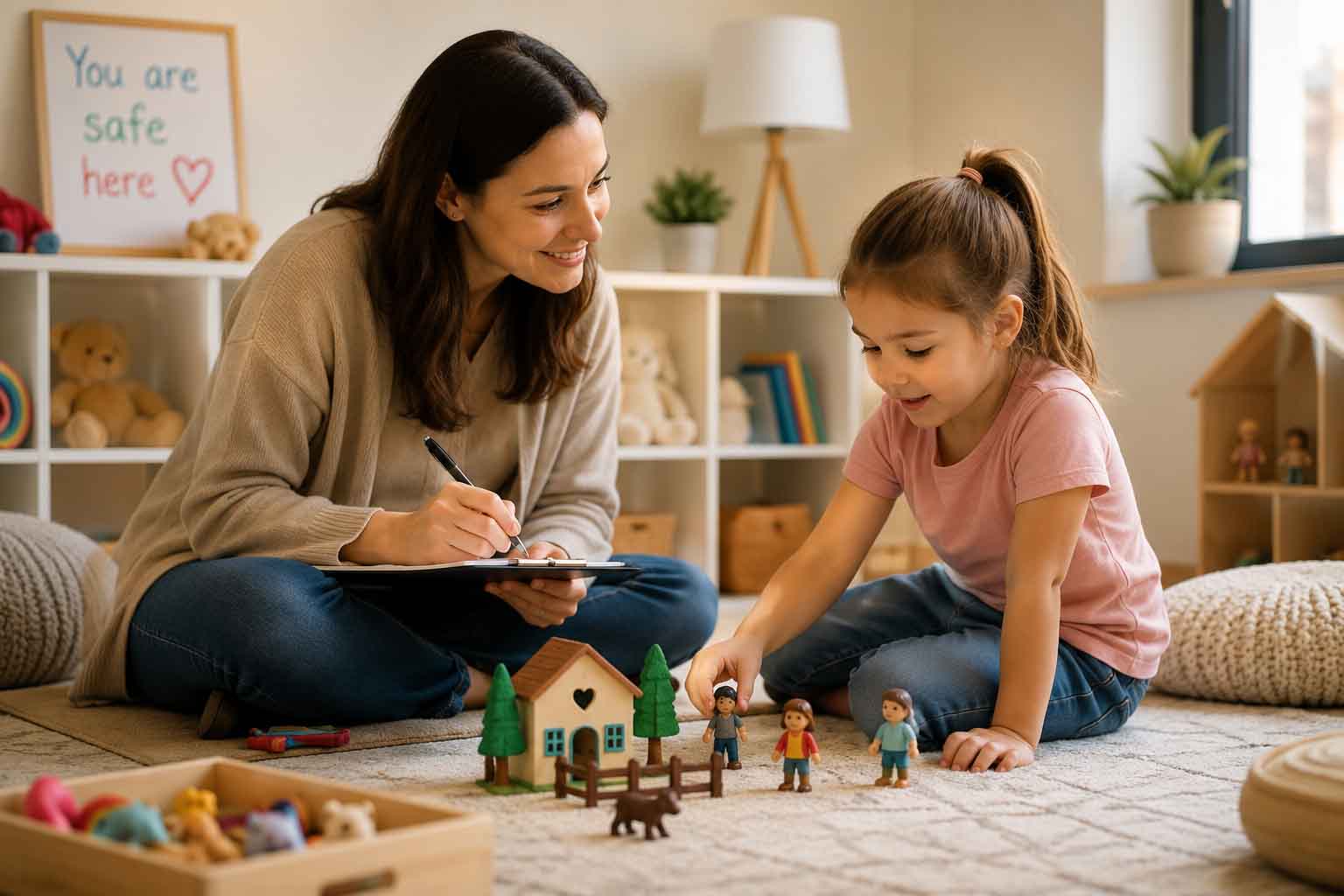
Play Therapy
Play Is a Child's Natural Language
Being a parent can be really exhausting and overwhelming - especially when your child is struggling with emotional or behavioural challenges and you are not sure how to help.
Children don't have the words or the emotional vocabulary yet to explain what they're feeling. But they don't need words to heal. Play is the natural means of expression for younger children — it gives them a safe space for emotional expression and awareness, helps them make sense of their life experiences, and teaches them new coping skills in a way that feels natural and unthreatening.
In play therapy sessions, your child is given the freedom to express themselves through toys, art, sand trays, storytelling, and games — with a trained therapist gently guiding the process. Children who have experienced trauma, grief, difficult family transitions, or behavioural difficulties often respond especially well to this child-centred approach.
Parents are an important part of the process too. Kiran provides guidance and support to help you understand and connect with what your child is working through.
Areas of Support
Play Therapy Can Help Children With
Children communicate differently than adults. Play therapy opens the door to healing in a way that meets your child where they naturally are.
Emotional Challenges
Trauma & Difficult Experiences
Behavioural & Social Difficulties
Family & Life Changes
Therapeutic Approach
How Play Therapy Works
Sessions are child-led and relationship-based while also teaching practical tools for managing emotions and challenges, with opportunities for parent-child sessions to strengthen connection and support progress at home.
01
Free 15-Minute Parent Consultation
We begin with a brief video call with you — the parent or caregiver — to discuss your child's situation, any concerns, and what you're hoping sessions can help with.
02
Initial Assessment
The first few sessions focus on getting to know your child and family, understanding the challenges you’re facing, and creating a plan to support your child’s goals and wellbeing.
03
Ongoing Play Therapy Sessions
Regular in-person sessions give your child a consistent, predictable space to explore feelings, process experiences, and develop coping skills through toys, art, sand trays, storytelling, and creative activities.
04
Parent Guidance & Support
You're kept informed and supported throughout. Kiran provides guidance on how to support your child's progress at home, so the work done in sessions extends into everyday family life.
Methods Used in Play Therapy
Expressive Play Therapy
Filial Therapy
Sand Tray Therapy
Art & Creative Expression
Stroytelling & Bibliotherapy
Attachment Therapy
Trauma-Informed Practice
Child Centred Approach
Mindfulness